Episode 1: Why I Started Building an Adventure Game
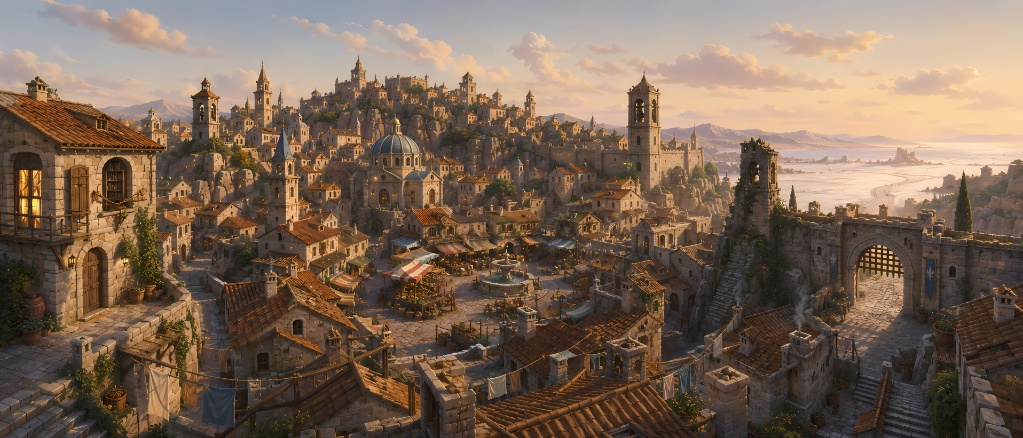
Episode 1: Why I Started Building an Adventure Game
Development Journal for Where the Arc Falls
Why this project exists
When people hear that I am building an adventure game, they sometimes assume I must have a background in the games industry. My professional experience is technical rather than game-specific: software, automation, engineering systems, AI, robotics, machine vision, cloud platforms, and tools that solve concrete industrial problems. Games were always something else for me. They were the place where I went when I wanted to experience a story that could only work interactively.
My actual experience in game development before this project was amateur. I had experimented, learned tools, followed games closely, and built small things, but I had never worked professionally as a game developer. That matters because it shapes the project. I am not approaching this as a studio veteran with an established production pipeline. I am approaching it as someone who has spent years solving engineering problems, but who has always carried a strong appreciation for the particular kind of storytelling that adventure games can do.
Why adventure games stayed with me
The games that stayed with me were rarely the ones that tested reflexes. They were the ones that asked me to pay attention. A good adventure game makes every object feel intentional. A locked door is not just an obstacle. A strange machine is not just a puzzle. A conversation is not just flavor text. The world itself becomes something the player has to understand. Progress comes from noticing patterns, making connections, remembering small details, and gradually learning the logic of a fictional place.
That is still one of the most powerful things about the genre. A good puzzle is not only a challenge; it is a way of making the player inhabit the world. When the puzzle is designed well, solving it feels less like beating the designer and more like understanding something that was always true inside the story. That kind of thinking is deeply satisfying to me. It asks the player to slow down, observe, and reason.
But the best adventure games do more than make you think mechanically. They also leave emotional residue. They create images, ideas, and moments that remain with you years later. Sometimes it is a line of dialogue. Sometimes it is the feeling of arriving somewhere forbidden. Sometimes it is the realization that the story was not about the mystery you thought you were solving, but about memory, grief, identity, truth, or the way people protect themselves from knowledge they are not ready to face.
That is the kind of game I wanted to build: a story-driven adventure that combines riddles, exploration, and emotional consequence. I wanted a game that makes the player think in the practical sense of solving problems, but also in the slower philosophical sense of asking what the world means and what its characters are afraid to know.
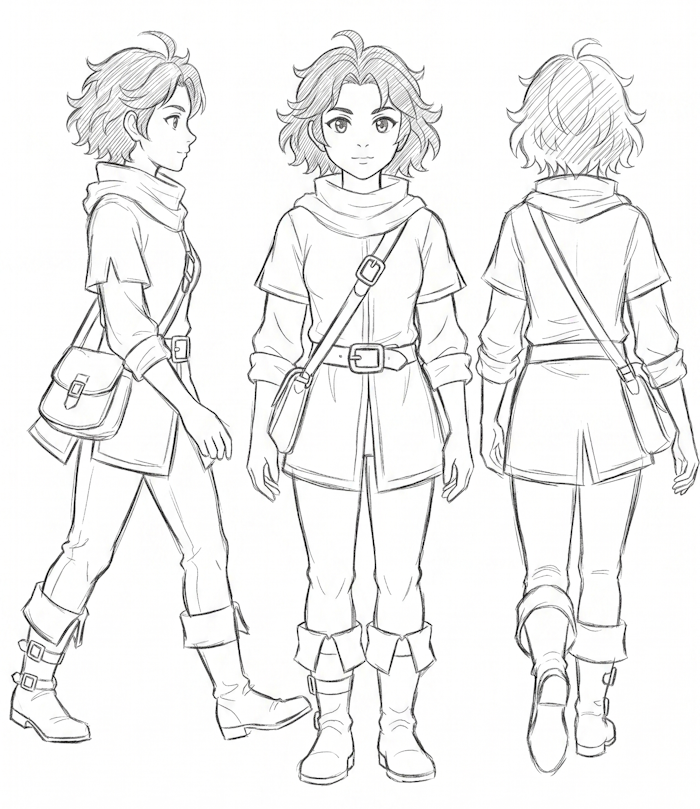
The game I wanted to make, and why it felt impossible
For a long time, that kind of project felt unrealistic for one person. Narrative adventure games are content-heavy. They need characters, dialogue, locations, animation, music, sound, interface design, puzzle logic, implementation, testing, and endless revision. Even a short chapter can require a surprising amount of material. A larger game can quickly become impossible for a solo developer, especially one with a full-time career outside the games industry.
That was the wall I kept running into. I could imagine the game. I could describe scenes, characters, and puzzle structures. I could think about the kind of emotional and philosophical experience I wanted to create. But imagining a game is not the same as producing one. The gap between the idea and a playable chapter was too large.
What AI changed, and what it did not
Modern AI tools changed that calculation. Not because they make the game by themselves (they can but I wouldn't want to play them!), and not because they remove the need for taste, judgment, or craft. They changed it because they made certain production bottlenecks, especially around prototyping, less absolute. Used carefully, these tools did not replace the work. They made it possible to attempt the work at solo scale.
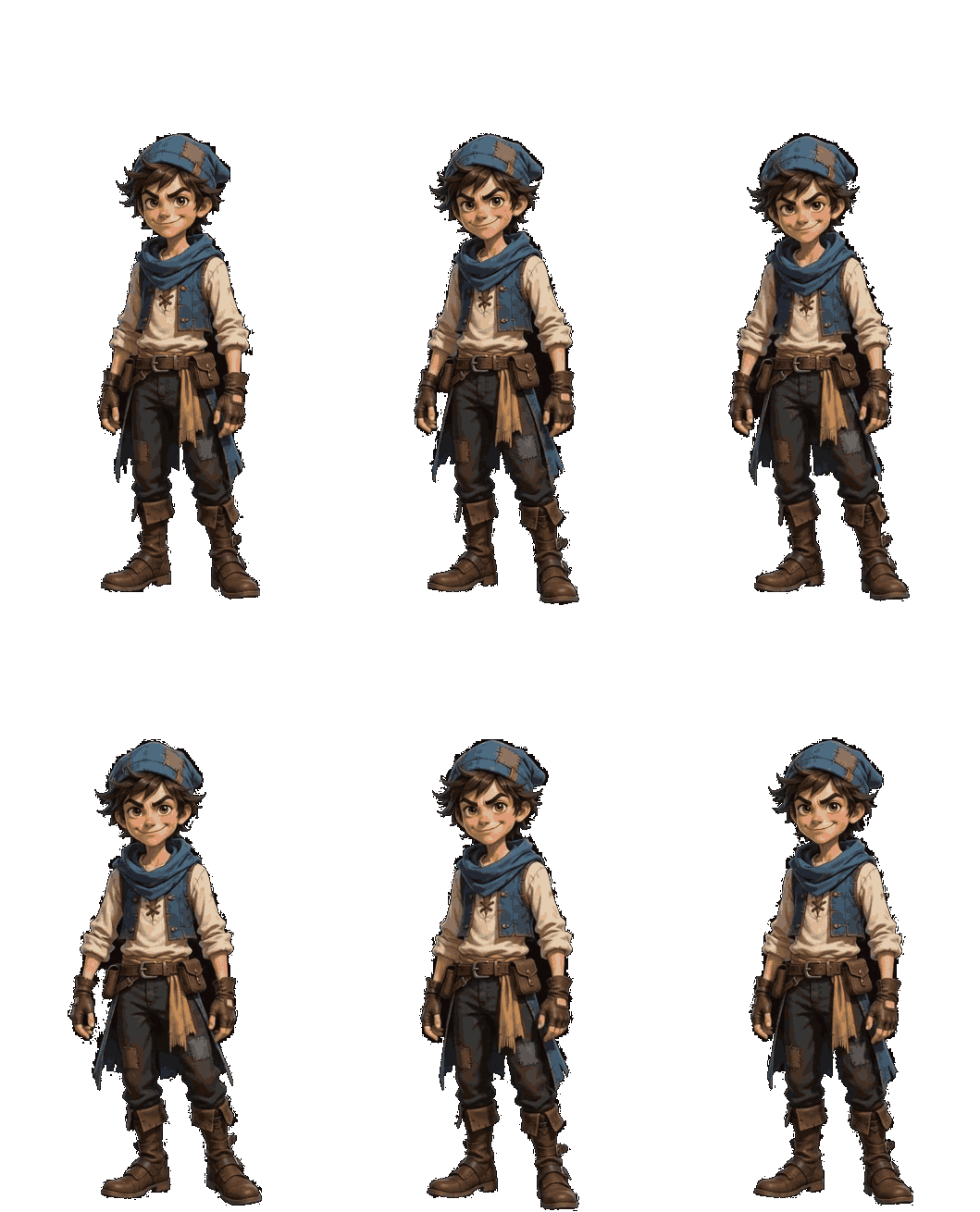
The project that came out of this is Where the Arc Falls, a story-rich point-and-click adventure about a girl beneath a broken sky, a boy aiming for the moon, and two civilizations that inherited only half the truth.
From an idea to a playable chapter
The first chapter is now in a fully playable state. The full chapter flow exists from beginning to end, although it still needs testing, bug fixing, and polish. Some systems need stabilization, especially around loading and state restoration. Some timed scenes and patrol sequences need refinement. But the important thing is that the project has crossed the line from idea to playable structure. That is the point where the work becomes different. It is no longer only about imagining the game. It is about testing whether the experience actually works for players.
Why I am documenting the process
This development journal is my attempt to document that process honestly. I am not writing it to claim that AI makes game development easy. It does not. I am writing it because I think there is value in showing what actually happens when a solo developer uses AI tools, Godot, automation, and a lot of iteration to build a commercial narrative adventure game.
Some parts of the process have worked better than expected. Some have failed completely. Some have introduced new problems I didn't anticipate: consistency, scope control, animation quality, production discipline, legal questions, and the simple fact I never shipped a game before, let alone solo.
That is what I want this series to cover. Not only the polished result, but the practical decisions behind it: why certain puzzles belong in the story, how animations are built, how reusable systems are created in Godot, and how feedback changes the game.
The experiment is still in progress
I do not yet know whether Where the Arc Falls will become a commercial success. That is part of the point. The project is still in motion. What I do know is that, for the first time, building this kind of game alone feels possible enough to seriously attempt. That alone makes it worth documenting.
What this series will cover
Future posts will go into the production process in more detail, including puzzle design, Godot systems, visual consistency, playtesting, and the hidden costs of trying to build a commercial game.
The next post will focus on puzzle design, specifically why adventure game puzzles should feel like part of the story rather than escape-room obstacles placed between story beats.
Discussion question
What adventure game, narrative game, or puzzle-driven story stayed with you long after you finished it, and why?
More information about the game can be found on the official Where the Arc Falls website .
Comments
Log in with itch.io to leave a comment.
Hi Zachi,
I've played your demo and even recorded it! I loved the game so far, especially how you handled the camera transitions, the overall style, and the character consistency. I was also very excited reading your article because it reminded me of my own journey as well.
I'd like to share some of my thoughts on the game UI, even though it might be too early at this stage:
Those are pretty much it—just minor UI suggestions. I liked everything else! The puzzles I've seen are well-made, and I wish you the best in completing the whole story.
May I also invite you to a small Discord server for fellow AI point-and-click adventure developers?
Hey morozig!
Thank you so much for the feedback AND for the video! It is a really great experience for me to actually see someone else playing the game and how they react to things I have been looking at for months.
I've taken note of your comments. Actually, most of them are already resolved in the next build, which I intend to release in the coming weeks.
As for skipping dialogue: I admit I went back and forth on that one. Originally it worked exactly as you describe: click anywhere to skip the current line. But I found that some players accidentally skipped important plot details and hints, sometimes without even realizing it. So eventually I made skipping more intentional. I'm still not completely convinced this is the right solution, though, so this is useful feedback.
One small thing I'd ask: I'd rather not describe Where the Arc Falls as an “AI game.” I definitely use AI tools in the production, particularly for VO, some image upscale and coloring work, prototyping and productivity, and I have no problem saying that. I just don't really see AI as the identity of the game. I've put a lot of work into the writing, direction, puzzles, character animation and overall design, and that's what I want the game to stand on.
AI has been extremely useful in proving to me that a game of this scope and genre can be feasible for a solo developer. If it eventually becomes a commercial project, I'd also like to put more budget into things like professional VO, animation and music.
And yes- I'd be happy to have a look at the Discord. Thanks for the invitation!
Hi! I see, I'm sorry for calling it AI game, I personally like AI but commercially it makes much more sence to ditch this before release. The way I found your game is on this search: https://itch.io/games/newest/ai-graphics/genre-adventure/tag-point-and-click
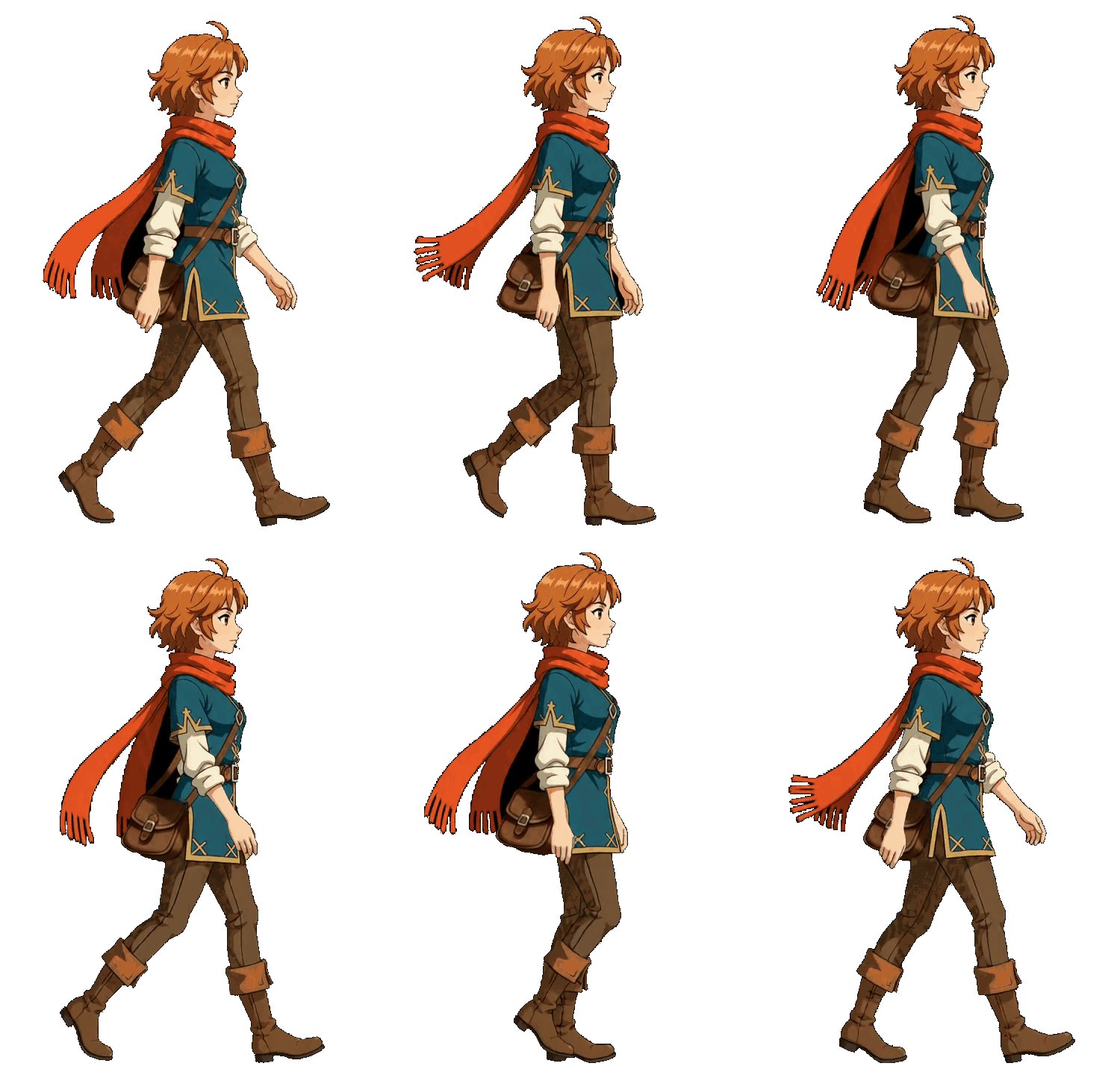
which is for games disclosing using AI graphics, not any other kind. Like for example the boy's animation on that exact page or the leather seller, I would be very surprised to know that they were hand drawn. If you intend to use AI only for coloring and upscaling I think it is safe to remove AI graphics from disclosure. But the thing I found on reddit is that trying to hide usage of generative AI(even if it was 1%, I'm not talking about upscalers or coloring of hand drawn sketches) makes people extremely angry.
As an adventure game developer and player myself I believe that all crucial dialog lines should be persistent(meaning npc would repeat them as long as you need this information to progress) while all filler lines are safe to be accidentally skipped.
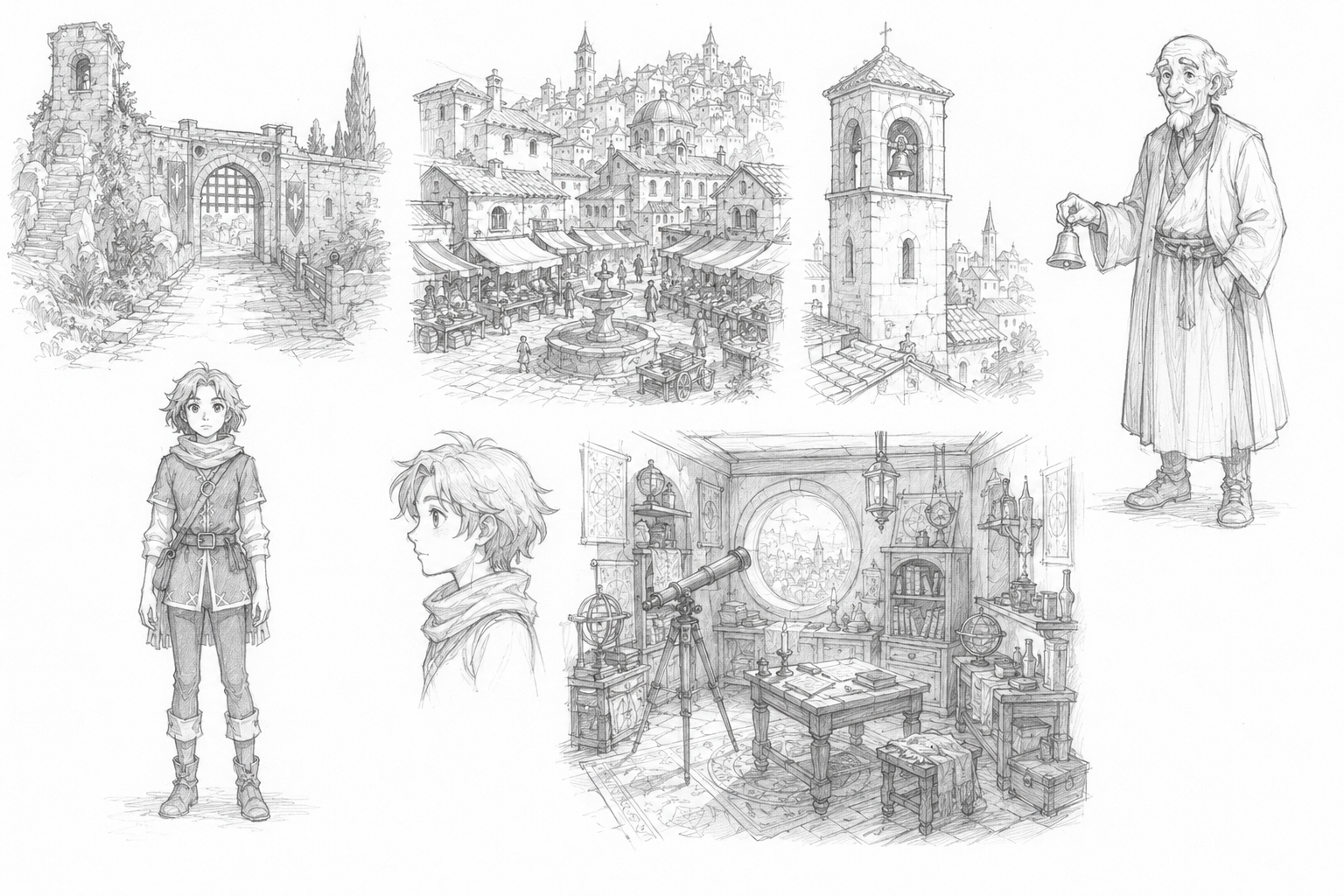
I find myself fascinated by the difference between your sketch for the room with the telescope and the final product, because I get a clear sense of hierarchy in the sketch (the telescope, the window and the table command my attention as a player, and everything else fades to the background with a few odd objects popping up) that I don't get in the final product (everything seems to be given equally importance, so everything seems almost banal; my eye is drawn everywhere and thus nowhere).
May I ask, was AI involved in the transition of sketch to final product? Because I'm trying to figure out what effects AI usage may have in composition that may dilute the original intention of the artist. And this is a great example, since you clearly drew the original room yourself (and if you didn't - why ask the AI to render a sketch?). So I'm curious about the journey from sketch to final, and whether the changes were your idea, or whether it was an AI thing, or whether it was an AI thing that you looked at and went "yes, as the original artist I approve".
Good question.
This is the 1st game I'm making and it is the one I dreamt on making for many years. Coming from a software background (with a painter/animator's heart) I originally thought AI would save time and allow me to finally do it the way I wanted. I also didn't realize the amount of negative feelings AI content can create within indie dev & player communities. Setting aside the debate, as I progress with the journey I come to realize the final game would be much better without AI, for the most parts, but it made me learn and adapt oh so much more quickly.
It is my intent, in case I prove this game is commercially viable, to replace all AI assets within the game. I have already replaced many of them and in the process to replace the rest.
As to the sketches to game process.
Most of the sketches are quite old - a few years back.
Sometimes I would ask AI to redraw from different perspective/different positioning based on my sketch just so it would better fit how I integrate it in the game. When drawing sketches I wasn't always able to think in advance about how the actual gameplay limitations would affect it. I did not feel it diluted from my intention by doing just that. I could never get a result from AI that I like as-is. I always have to edit it extensively / remove unwanted details and draw in others. AI was used mainly to save time on coloring and upscaling images to "level" size - using creative commons AI models. I do all the animations, shaders and coding myself using skeleton/bone rigs authored and keyframed in Spine.
Fascinating, thank you. I suppose it's silly to ask "do you feel that the AI passes have brought your composition to a place you dislike", because, if it did, or rather when it did, you edited it to a place you did like, naturally. :) many thanks!
This was an interesting read. Your experience is quite common. I've worked in games from indie to AAA over the past 10 years, and even just 4-5 years ago it was difficult to really get progression on prototypes inside a short timeframe, whereas now we are able to get some initial systems and what we call "interactive mood boards" much easier. Unfortunately what that often means is that expectation moves too, often still, unrealistically.
I was hoping to download a demo, if not the first chapter but it appears that there is nowhere to do so. If there is somewhere to sign up, please let me know. I enjoyed reading the blog post, and I have been playing point and click adventures for years.
Nostalgicbear, thanks for your reply and interest in downloading and trying the game! Right now I haven't yet set up a sign-up page for the beta as we are doing play-testing with "friends and well-wishers". We believe chapter I is now beta ready, and will soon (1-3 weeks) open it for additional players. I will offcourse post about it here on itch.io.